
Estimated reading time: 9 minutes
🎧 Available in audio
You can listen to this article, The Heart of Power – Episode 12: The Quietest Crisis, narrated in full. Whether you’re walking, driving, or just prefer to hear it aloud, click play below.
Editor’s Note
This essay is a work of narrative nonfiction. It is based on contemporaneous reporting, memoirs from family members and senior aides, publicly available medical accounts, and established clinical understanding of early Alzheimer’s disease.
While scenes are rendered narratively, the events, behaviors, and medical dynamics described here reflect documented observations rather than invention. No dialogue is quoted verbatim unless it has been previously reported.
The aim is not speculation, but synthesis: to examine how cognitive decline can remain functional, sometimes invisible, within systems designed to preserve continuity, authority, and dignity when the cost of error is constitutional.
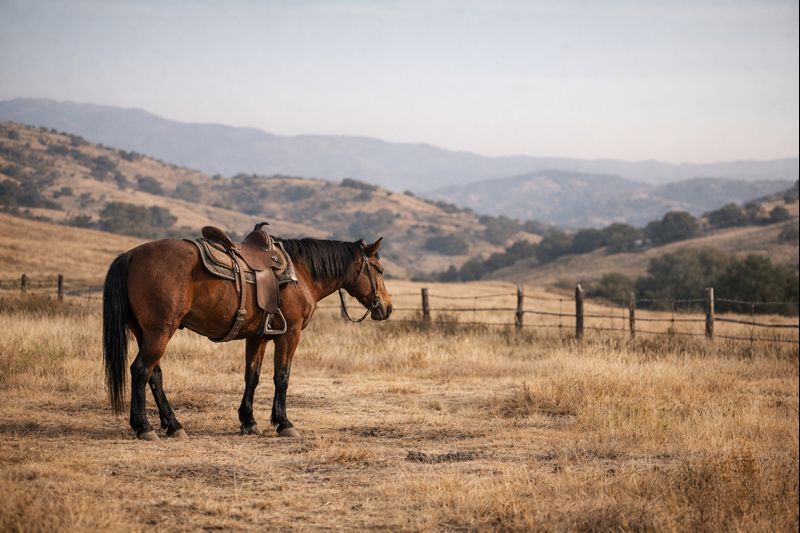
The story most people remember is the letter.
The handwriting.
The calm phrasing.
The courtesy of it.
Ronald Reagan writes to the American people and tells them he has Alzheimer’s disease.
He does not dramatize it.
He does not ask for pity.
He does not linger.
He does what he always did when the country grew uneasy: he speaks softly, offers reassurance, and tries to make the moment feel orderly.
The letter is carefully shaped.
It avoids detail.
It thanks the public for the years.
It asks for privacy.
It places what comes next in the hands of those who will care for him.
And what is striking—almost unsettling—is how intact he sounds.
This is not the voice of advanced dementia.
This is the voice of someone who still knows what is coming.
The sentences are complete.
The tone is steady.
The self is still present.
The letter reads like an ending.
But it isn’t.
It’s a disclosure—not a beginning.
The Room Still Listens
The room quiets before he speaks.
Not abruptly. Not by command. It settles the way a theater does when the lights dim. People shift in their chairs. Conversations taper off. Someone finishes a sentence a little too quickly.
Ronald Reagan waits.
He has always known when to wait.
He begins with a story. A familiar one. It has a clean arc and a line near the end the audience recognizes before it arrives. He delivers it anyway. He enjoys the recognition. They enjoy it too.
Laughter breaks where it should.
His timing is flawless.
He doesn’t argue policy. He doesn’t parse details. He frames ideas as values and returns them as stories. Complexity dissolves without ever being denied.
The room listens.
From the back, an aide glances at a colleague.
Not alarm.
Not even concern.
Just recognition.
He’s told that story before.
The same way.
As long as the room still listens, the performance still counts.
The Evening Repeats
Nothing needs him here.
There are no schedules waiting to be satisfied, no decisions requiring resolution, no one listening for direction.
The day does not ask for performance.
Nancy notices it late in the day.
Not names. Not places. Not dates. Those remain intact.
What changes is subtler.
A comment is repeated.
Then repeated again.
Exact phrasing. Exact tone. As if the thought never finished traveling through him.
At first, she corrects him.
“Oh, you already told me that.”
He smiles.
“I did?”
No embarrassment. No defensiveness. Just mild surprise—and then relief when she reassures him it doesn’t matter.
One evening, she opens her mouth to correct him again—and stops.
Not because she forgets.
Because she sees the pause it creates.
The flicker of uncertainty.
The way it costs him something to be interrupted.
So she lets it pass.
Not dramatically. Gradually. Intuitively.
Love adapts quickly.
At home, the buffer has a name.
And she is already carrying it.
Normal Exams
The examinations are uneventful.
They always are.
A familiar room. A calm routine. Questions asked in practiced order. Reagan answers without hesitation. He smiles easily. He makes a small joke about memory — the kind of line that invites reassurance.
He receives it.
Names. Dates. Simple calculations. Short sequences repeated back without effort. He does not struggle. He does not hesitate. He does not fail.
On paper, everything is normal.
The tests are designed to catch collapse, not narrowing. They look for what is broken, not for what has quietly stopped being used.
Nothing is wrong enough to name.
And without a name, nothing can be touched.
Cue Cards
The Oval Office is quiet before meetings begin.
Not silent, there is always movement somewhere, but held. Papers aligned. Chairs squared. Water placed within reach. A room arranged to reduce friction before it can occur.
On the desk, a small stack of cards waits.
They are not new. Presidents have always used notes. Reagan himself has relied on them for years, for names, figures, transitions.
What has changed is not their presence.
It is their precision.
Each card contains a single idea.
No cross-references.
No optional turns.
The order matters.
Someone suggests adding one last point, something late, something worth flagging. The aide pauses longer than necessary, then shakes his head.
“Let’s leave it out.”
No explanation follows. None is needed.
Reagan enters smiling, unhurried. He greets everyone as if this were his first meeting of the day. He takes his seat, glances at the cards, and nods once.
He does not rearrange them.
He does not add anything.
The meeting can begin.
Ron notices what others smooth over.
He hears the repetitions first—not as lapses, but as loops. Stories that return unchanged. Questions that circle back without awareness they have already been asked.
At first, he treats it lightly.
A half-joke at dinner.
“Dad, you already told that one.”
Reagan laughs it off. So does Nancy. The moment dissolves.
Too easily.
Ron doesn’t let it dissolve.
Over time, he becomes more direct. He presses for clarification. He asks questions that require his father to step off the familiar track.
The effect is immediate.
Reagan withdraws slightly. The ease drains from the room. The conversation stiffens.
Nancy intervenes.
“Let it go.”
To Ron, it feels like denial.
To Nancy, it feels like protection.
Neither of them is wrong.
What unsettles Ron most is not a single lapse—but how quickly the room adapts. How efficiently the discomfort is absorbed. How smoothly the truth is redirected.
He insists.
The room tightens.
Topics change. Jokes arrive early. Evenings shorten. Ron is encouraged—gently, firmly—to stop pushing.
He doesn’t feel reassured.
He feels managed.
And the first person to say it out loud becomes the problem.
Improvisation is Gone
The Cabinet Room has its own rhythm.
This is where presidents are supposed to steer.
A question comes, detailed enough to require synthesis.
All eyes turn toward him.
Reagan smiles, nods once, and says, “Why don’t we hear a little more on that.”
Reasonable. Even wise.
The question returns, reframed.
He defers again.
There is a brief pause, just long enough for no one to speak, for the room to hesitate, unsure who should move next.
Then someone does.
Someone else follows.
The room adjusts.
Later, a senior aide begins summarizing aloud. Not planned. It simply feels necessary.
Reagan nods, agrees, offers a closing remark.
Urgency passed through the room without ever touching the man at its center.
The Moment That Doesn’t Land
The briefing is not supposed to be complicated.
It has been pared down carefully. Plain language. Clear stakes. This is one of the issues that still requires the president’s attention, not because it is abstract, but because timing matters.
Someone says so directly.
Reagan listens, leaning slightly forward. He nods at the right moments. He smiles when a familiar name is mentioned. Nothing about his posture suggests distraction or confusion.
Then the briefing reaches its core, the part meant to provoke urgency.
He does not react.
Not dismissively.
Just neutrally.
A pause follows.
The presenter waits, expecting a question, a directive, a reframing. Reagan looks thoughtful, as if he is weighing what he has heard.
Then he speaks.
He tells a story.
It is gentle. Familiar. Drawn from earlier years. About patience, steadiness, perspective. It lands well enough. A few people smile.
The story resolves nothing.
The presenter glances down, then back up.
The urgency has passed.
There is no clean way to retrieve it without forcing friction—without interrupting the tone Reagan has set. The room moves on.
Later, the issue is reframed in a way that allows deferral without refusal. Reagan agrees readily.
The system closes the gap.
That evening, the briefing is summarized again, shorter this time, with a recommendation attached.
He accepts it without objection.
Urgency arrives safely packaged.
From then on, nothing reaches him raw.
The Unspoken Rule
No one says dementia.
They say fatigue.
They say style.
They say delegation.
The language is careful.
Not evasive. Just usable.
Euphemism makes room to keep things moving.
Meetings grow shorter without raising alarm.
Decisions arrive already shaped.
Concern exists, but never has to declare itself.
Each small choice makes sense on its own.
Together, they settle into silence.
Silence is easier than uncertainty.
Easier than accusation.
Easier than asking a question no one can yet answer.
Over time, silence stops being a courtesy.
It becomes policy.
Why No One Diagnosed Him
Looking back, the question almost asks itself.
Why didn’t anyone diagnose him?
There was no single moment of failure. No disorientation. No loss of language. No inability to function in daily life.
He continued to perform.
He spoke fluently.
He recognized people.
He navigated examinations without difficulty.
Routine cognitive screens showed no impairment that crossed diagnostic thresholds.
There was no objective failure to point to.
And without failure, there is no diagnosis.
At the time, there were no biomarkers. No imaging that could settle the question. Diagnosis relied on clinical breakdown, impairment that clearly interfered with life as it was lived.
That line was not crossed while he held power.
This mattered.
To label a sitting president with a neurodegenerative disease was not a neutral act. It carried constitutional weight, political consequence, and irreversible personal harm.
Medicine does not move on inference alone when certainty is required.
It waits.
This restraint can look uncomfortable in retrospect. It can resemble avoidance or silence mistaken for complicity.
It was neither.
To name too early would not have been caution.
It would have been harm.
Clarity would come later—after power had passed, after structure had fallen away, after the disease no longer needed help hiding.
Not because medicine finally noticed.
But because, at last, it was allowed to be certain.
The Long Goodbye
When the presidency ends, the structure goes with it.
The schedule dissolves.
The meetings disappear.
The scaffolding falls.
What remains is the ranch. Wide land. Repetition without demand. Days shaped by weather rather than obligation. No staff waiting, no rooms arranged in advance, no one finishing sentences before they stall.
Without the structure, decline accelerates.
Time fragments.
Context slips.
Questions repeat.
There is no longer enough architecture to hide what is failing.
Language thins. Recognition fades. Emotion remains.
Reagan is warm, gracious, present—without continuity.
Nancy remains as a constant.
The public sees almost nothing.
Alzheimer’s does not end with drama.
Only subtraction.
Memory, which once sustained power, is now gone entirely.
Power has long since moved on.
Epilogue – Memory and Power
Power is continuity.
When memory frays, systems adapt.
They substitute.
They buffer.
They protect.
This is not corruption.
It is care.
Ronald Reagan was carried—by family, by staff, by institution—until there was nothing left to carry.
Power survived him.
Memory did not.
If you enjoy DocsOpinion’s articles, you may also like my Substack newsletter — shorter reflections, serialized essays, and behind-the-scenes notes on medicine, history, and science.
No spam. Unsubscribe anytime.
Next in the Heart of Power
Next in The Heart of Power: George H. W. Bush, a president whose body failed before his judgment did, and who chose to let go while he still could.
Episode 13: The Grace of Letting Go – coming next.
Previous:
Episode 1. The Heart of Power: When Metabolic Disease Entered the Oval Office – William Howard Taft
Episode 2. The Heart of Power: The Golf Course Heart Attack – Dwight D. Eisenhower
Episode 3. The Heart of Power: The Stroke That Silenced a Dream – Woodrow Wilson
Episode 4. The Heart of Power: Built To Stand, Bound To Fall – John F Kennedy
Episode 5. The Heart of Power: Where Strength Sat Still – Franklin D. Roosevelt
Episode 6. The Heart of Power: The Ride Into the Sunset – Ronald Reagan
Episode 7. The Heart of Power: The Enemy Inside – Richard M Nixon
Episode 8. The Heart of Power: The Ticking Man – Lyndon B Johnson
Episode 9. The Heart of Power: The Doctor Who Knew Too Much – George G Burkley
Episode 10. The Heart of Power: When the Moon and Stars Fell on One Man – Harry S Truman
Episode 11. The Heart of Power: The Fragile Icons – John F Kennedy & Marilyn Monroe
References
- Sigurdsson AF. The Heart of Power – Episode 6: The Ride into the Sunset. DocsOpinion. 2024. Available from: https://www.docsopinion.com/the-heart-of-power-episode-6-the-ride-into-the-sunset/
- Reagan R. My life with Alzheimer’s. Letter to the American people. November 5, 1994.
- Reagan N. My Turn. New York: Random House; 1989.
- Reagan R. An American Life. New York: Simon & Schuster; 1990.
- Brands HW. Ronald Reagan: The Life. New York: Doubleday; 2015.
- Morris JC, Storandt M, Miller JP, et al. Mild cognitive impairment represents early-stage Alzheimer disease. Arch Neurol. 2001 Mar;58(3):397-405. doi: 10.1001/archneur.58.3.397. PMID: 11255443.
- Jack CR Jr, Knopman DS, Jagust WJ, et al. Hypothetical model of dynamic biomarkers of the Alzheimer’s pathological cascade. Lancet Neurology. 2010;9:119–28.
- Stern Y. Cognitive reserve in ageing and Alzheimer’s disease. Lancet Neurology. 2012;11:1006–12.
- Lezak MD, Howieson DB, Bigler ED, Tranel D. Neuropsychological Assessment. 5th ed. Oxford: Oxford University Press; 2012.
- Gilbert RM. Presidential Disability and the Twenty-Fifth Amendment. New York: Fordham University Press; 2000.